|
Traditionally, the hardware fittings of a door refer to hinges and locks. Since **s registered a patent for the first modern hydraulic door closer in the early twentieth century, the various functions of door closers in use have gradually been accepted by people, making them another major category of door hardware. Nowadays, door bottom seals, door stops and coordinators have all become part of architectural hardware. Generally speaking, doors can be divided, by opening direction, into single-action doors and double-action doors. The hardware fittings of these two types of doors are very different, so it is necessary to examine them separately.
1. Hinge

There are many types of hinges. On wooden doors, the folding hinge is commonly used **ally, that is, two hinge leaves connected by a ** pin, made of ordinary steel, stainless steel or copper. Because the friction between the two hinge leaves easily produces noise and at the same time increases frictional resistance, nylon-washer hinges were **ed, and finally bearing hinges appeared, all aimed at reducing resistance and lowering noise. This type of hinge has screw holes drilled directly on the leaves and is connected to the door leaf and the door frame with self-tapping screws along the plane of the frame. Because the direction of the self-tapping screws coincides with the moment exerted by the door leaf's own weight on the hinge, this type of hinge can only be used on wooden doors with very good frame material; the door leaf cannot be heavy, and an operator for an automatic swing door cannot be installed. In particular, if any changes or adjustments are to be made to the door leaf after installation, the self-tapping screws must be removed, which will inevitably affect the strength of the hinge.
To ** the load-bearing capacity of hinges and the convenience of use, pin hinges (lift-off hinges) were **ed. This type of hinge is divided into upper and lower leaves; the upper leaf is connected to a larger-diameter ** pin that can be inserted into the hinge hole of the lower leaf. Once the hinge is installed, the door leaf can be easily attached or removed simply by making the door leaf perpendicular to the plane of the frame. This type of hinge has various ways of connecting to the door leaf and frame, avoiding the weakness of self-tapping screws bearing longitudinal force. However, the ** of this hinge depends on the machining accuracy, heat-treatment strength and installation precision of its components, so there are almost no **ally made products. To ensure the installation precision of the hinge, foreign manufacturers provide special installation jigs as optional accessories, and even provide dedicated hinge installation equipment. On ** steel fire doors there is a **ally made ball-bearing hinge, in which a steel ball is embedded at the top of the hinge pin in an attempt to reduce friction, and there are also washers between the two leaves to adjust the height. Because the machining accuracy and installation precision are not high, this type of hinge has relatively large frictional resistance and noise.
The hinges for aluminum alloy doors are rather special. Because aluminum alloy profiles are not very thick, self-tapping screws cannot be used, and unlike steel doors they cannot be directly welded; **over, aluminum alloy doors fitted with insulating glass sometimes weigh ** than ** kg, so the hinges for imported aluminum alloy doors are all very costly. Aluminum alloy door hinges are all pin-type hinges, available in two-leaf and three-leaf types. **-strength nylon washers are added between the leaves, and ** hinges can also be adjusted horizontally. The fixing of an aluminum alloy hinge must be done through an aluminum alloy fixing block, which connects to a flexible spring leaf that is inserted into the cavity of the aluminum profile and secured with machine screws. If installed with sufficiently high precision, this type of hinge can support large doors weighing up to 2** kg.
2. Lock

Of all hardware fittings, the lock is the part with the greatest variety, the most complex structure and the strictest engineering management. The great variety of locks arises because people have many different requirements for locks in use. Entrance door locks require a high level of anti-theft and anti-destruction performance; passage door locks in public areas need to be durable but have no cylinder; restroom locks need to be easy to unlock and have a status indicator. The structural complexity comes from the different anti-theft grades and special functions. If a building has many doors, key management must be carried out by dedicated personnel according to procedures during construction; otherwise the consequences would be unimaginable. Nowadays, large buildings in China have gradually adopted a hierarchical key management system, namely the master key system. Structurally, locks are divided into two types: integrated locks and split locks.
(1) Integrated lock
Integrated locks are mainly cylindrical (unit) locks; recently a quick-install lock has appeared in Europe, which also belongs to this integrated type. The characteristic of this lock is that the lock case, cylinder and handle are combined into one unit, making installation convenient and the functions simple. The unlocking structure of a cylindrical lock is a sleeve-type drive, which easily **s faults. **-** cylindrical locks have special designs in the drive structure to reduce the failure rate. The drive structure of the quick-install lock is the same as that of a split lock, and the cylinder is placed at the axis of the handle to ** reliability. This type of lock is often used on entrance doors and interior doors with low security requirements. However, the drawback of this integrated lock is that it has only one latch bolt, so it is difficult to raise the anti-theft grade. In addition, the handle styles of this lock are relatively limited, leaving users with a small range of choices.
(2) Split lock
Split locks, also called mortise locks, refer to locks formed by combining independent lock cases, cylinders and handles. In Europe, these three parts of a lock are independently produced by highly specialized manufacturers. Manufacturers offer complete sets of locks on the market through coordinated matching, or experienced ** hardware sales companies provide architects or users with matching solutions for various locks. These ** sales companies actually play a very important consulting role. The existence of this situation depends on the formulation of relevant European standards and the serious attitude of European manufacturers toward strictly implementing those standards.

The mandatory nature of these European standards is not artificial. If a manufacturer does not produce according to the standard, its products cannot match those of other manufacturers and therefore cannot be sold. If a manufacturer does not apply to a dedicated certification body for testing and obtain the corresponding certificate, other manufacturers, users or sales companies cannot determine whether its products meet the standard. If a ** certification body does not test strictly according to the standard, it will lose the authority of its certificates and its own survival will be threatened. The standards thus become objective, beneficial to every party, and at the same time establish their own dignity. In the United States, several large lock manufacturers produce all components in full sets, or adopt the OEM (bundled sales channel management) approach to make or procure them at designated points. Although this limits diversity to a certain extent and raises costs, it is beneficial for maintaining the overall ** of products and building the brand image.
The lock case is an important aspect of lock function and a key link in anti-destruction and anti-theft performance. A simple lock case has only a single latch bolt, which can be opened with a reasonably strong thin sheet, so a square deadbolt protruding part linked to the locking action is usually additionally designed. For lock cases with a fixed latch, left/right handing must be noted when ordering, so some lock cases are designed with a reversible latch to avoid ordering and installation mistakes. One way to ** the anti-destruction level of the lock case is to add a square bolt, also called a deadbolt. A lock case with a single square deadbolt can be used on storage room doors to prevent forgetting to lock the door. To further enhance the anti-theft and anti-destruction performance of locks, there are ** so-called multi-point interlocking locks, in which one or two bolt-type or hook-type deadbolts are additionally provided at the door edge and linked to the locking/unlocking action of the lock case. In high-security areas, a lock case with two cylinders can be used; the door can be unlocked only when both keys release the two cylinders simultaneously.
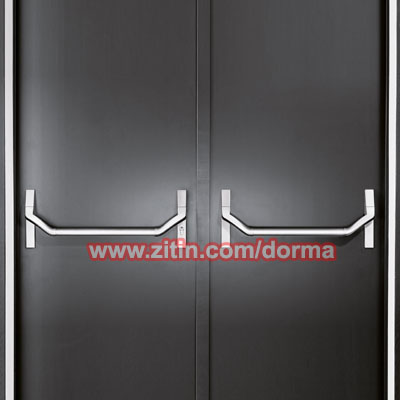
The lock for an emergency exit door is a special lock case. This lock case can be locked with a key to prevent unauthorized entry from outside, yet the door can be easily opened from the inside by turning the handle.
There are usually two holes on the lock case. One is a square hole with a side length of 10mm or 8mm, and in very rare cases 6mm. This hole is the socket for the square metal spindle connecting the handles on both sides; when ordering, you must specify the size of the lock case spindle hole and the thickness of the door leaf. The spindle hole is actually a drive shaft with a spring return mechanism; the force and ** of the spring directly affect the operation of the handle and is one of the important causes of lock failure. The connection between the handle and the spindle is achieved through a set screw on the handle. To prevent the set screw from slipping off the spindle, one European handle manufacturer designed and machined a curved groove on the spindle, which is very creative. The other hole on the lock case is the cylinder hole. The cylinder hole comes in two shapes: European and **. When ordering the cylinder, you must specify the distance from the center of the driver tongue used for locking/unlocking inside the lock case to the planes on both sides of the door leaf.
The cylinder is the core of a lock's anti-theft function, comprising the cylinder body and the key. The simplest cylinder is a single-row pin cylinder fitted with a toothed key. This cylinder has low anti-theft performance and is easy to duplicate. The key duplication rate of this cylinder is relatively high, and the number of pins determines that rate. ** anti-theft grade cylinders use two-dimensional or three-dimensional tapered pins, with tapered depressions on two or even three sides of the key. Because this cylinder has ** pins, ** permutations of pin positions, and ** combinations of tapered depression depths on the key, the duplication rate is low and it is very difficult to pick. Duplicating this kind of key when you have a key sample requires special equipment. If all keys for the cylinder are lost, you can only provide the manufacturer with the cylinder number, and the manufacturer will copy the key based on the records stored in its computer. A ** advanced cylinder designs an electronic identification circuit at the end of the key of this tapered-pin lock, making it impossible to duplicate based merely on a key sample.
** anti-theft grade cylinders are mainly used in areas with high security requirements, such as entrance doors and office rooms. But in some areas the anti-theft grade requirement is not high; for example, passage doors do not need a cylinder at all. Locks for restrooms in public areas, on the other hand, need to be lockable only from the inside, relatively easy to open from the outside, and equipped with a device showing people outside whether the room is occupied.
Usually a cylinder consists of two **ly symmetrical halves, so the same key can open the lock from both sides. But in some cases only single-side locking is needed; for example, the connecting door of a hotel suite sometimes consists of two doors, each of which can be opened from only one side and must not be openable from the other. In this case only one side needs a cylinder, and this is called a half-cylinder. Half-cylinders are also used on emergency exit doors, except that the lock case of an exit door is a special lock case.
A master key system makes some keys open only specific locks as needed, while certain keys can open one group, several groups, or all locks. In China, master key systems are generally used for the **ized management of large commercial buildings. Experienced hardware suppliers provide users with hierarchical management solutions according to their management needs, organized by building area (such as floors) and functional area (such as office areas, entertainment areas, management areas, etc.). All doors within the same level area are fitted with different cylinders and keys, but one key can open all doors in that area. Large buildings can be equipped with multi-level master key management systems as needed.
3. Handle

The handle is key to expressing the decorative style of a building, and it is also the only fitting that comes into direct contact with the person using the door. Therefore, users' choice of handles is highly personalized. Every manufacturer has designers with strong creativity and rich imagination who constantly design new styles to meet people's aesthetic needs; other manufacturers, in order to highlight their brand image, continuously launch various variations of the same style, giving a ** interpretation of the same theme. Stylistically, handles can be classical and luxurious, or modern and simple, or even abstract. Some designers carefully analyze people's gripping motion and hand shape, designing handles into curved shapes, precisely so that people feel comfortable when touching the handle.
Handles are generally made of copper, aluminum alloy, stainless steel and other electroplated metals, or of nylon. Electroplated metal handles can come in various colors, but long-term or frequent use may wear off the surface coating; therefore, if the composition of the coating is not well controlled, it may cause a certain degree of harm to the human body. Copper handles are relatively elegant and have no wear problem, and **adays there are many special cleaning agents for removing copper patina, which can keep the handle's own elegant luster, while the content of trace elements in the copper causes differences in the color of copper handles. Aluminum alloy handles have many styles because aluminum alloy has high plasticity and can fully express the designer's creativity. The surface of an aluminum alloy handle can be painted, anodized, or electrostatically powder-coated. Painted aluminum alloy handles are relatively low-end, and anodized ones also have a wear problem; electrostatic powder-coated surfaces are wear-resistant and come in many colors, and different powder compositions can achieve different finishes. Because of its high material stability and strong decorative metallic luster, stainless steel is widely used in the manufacture of handles. Stainless steel handles have two surface finishes: mirror and brushed, with slightly different decorative effects. However, different alloy compositions of stainless steel make its machinability and corrosion resistance differ. European, and especially German, stainless steel products usually state the grade of the stainless steel.
Nylon handles are one of the main products of nylon hardware; their shapes and styles are relatively rounded, and the special luster of nylon looks rather elegant and strongly modern. The most outstanding feature of nylon handles is their thermal effect: no matter how cold the climate, a nylon handle never feels cold to the touch. Nylon handles and other nylon hardware (nylon hinges, door stops, pulls, hooks, restroom partition hardware, restroom hardware, railings and stair handrails, sign plates, etc.) have a structure consisting of an internal steel core and an external nylon surface. The internal steel core makes the strength of nylon hardware no different from that of any other hardware, while the external nylon layer fully shows its ** decorative effect and the comfortable feel on the hand. The key to product ** lies in the physical and chemical stability of the nylon and the firmness of its bonding to the metal. If stainless steel hardware expresses a certain cold and resolute character, and nylon hardware expresses a certain gentle and soft **, then the nylon-and-stainless-steel combination hardware launched in Europe in recent years embodies the beauty of combining strength with softness. Nylon-stainless-steel hardware designs the parts that the hand can touch in nylon and the other parts in stainless steel, with the stainless steel at key connection parts designed to be round. The key requirement for the nylon composition is that it must contain no harmful substances and must comply with the relevant hygiene standards.
However, whatever the type of handle, the connection between the handle and the lock case, or between the handle and the lock case spindle, is a basic ** requirement. The connection between the handle and the lock case spindle is achieved through a threaded hole in the handle via a set screw. The machining accuracy of the threaded hole and the material and machining accuracy of the set screw are the key to meeting this ** requirement. If something such as stripped set screw threads occurs, the entire handle must be replaced. This shows that the manifestation of hardware ** is sometimes very subtle; without unified standards and ** control over hardware product **, it would be difficult to guarantee users' interests.
On the side opposite the hinges of a single-action door (i.e., the push side), a rectangular stainless steel plate is sometimes used in place of a handle; this device is called a push plate. This not only prevents accidental operation but also lowers costs, and is usually used on passage doors and other doors in public areas.
4. Door Closer
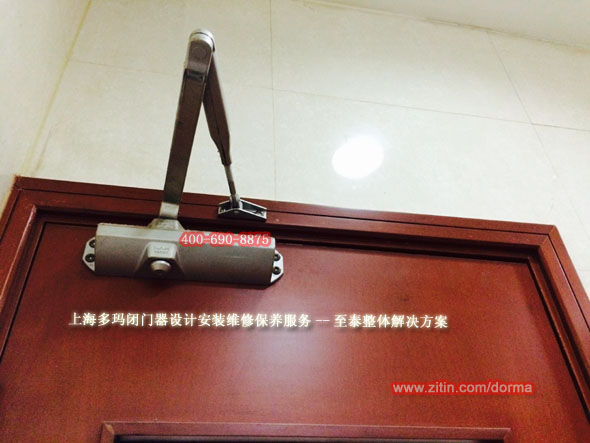
The modern hydraulic door closer (door closer for short) began with a patent registered by **s in the early twentieth century. The core idea of hydraulic door closer design is to achieve control over the door-closing process, so that the various functional indicators of the closing process can be adjusted according to people's needs. The significance of a door closer lies not only in automatically closing the door but also in protecting the door frame and the door leaf; ** importantly, the door closer has become an actuator in the intelligent management of modern buildings that cannot be ignored.
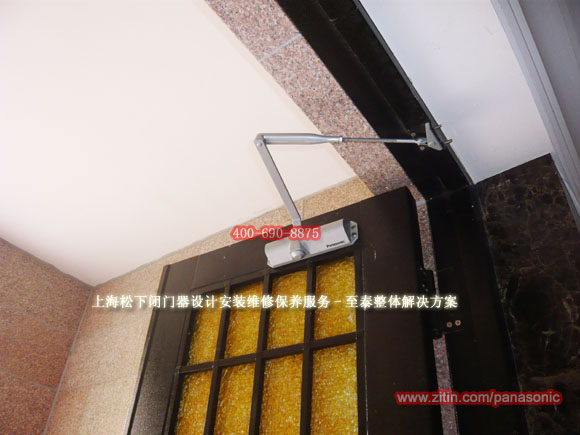
The basic structure of a hydraulic door closer consists of a bearing drive, a spring, a one-way oil valve, a return oil circuit, and a housing and arm. The housing and arm serve to fix the door closer and connect the door leaf to the frame. Its working principle is that, during opening, the arm turns the bearing drive, which compresses the spring and squeezes the hydraulic oil to one side through the one-way oil valve. After the opening process is completed, the elastic potential energy accumulated by the spring during opening is released to close the door. During the spring release, because the one-way oil valve is closed, the hydraulic oil forms resistance to the spring release; this resistance changes as the hydraulic oil flows back along a specific return oil circuit, so the closing speed is controlled. By setting various valves on the return oil circuit, the controlled closing process can be made variable or adjustable. In terms of drive structure, door closers have two types: rack-and-pinion drive and worm gear drive; the latter is mainly used for floor springs.
(1) Functions of the door closer and their adjustment
Almost all door closers have two basic adjustable functions: closing speed and latching speed. The latching speed is adjusted according to the hardness of the latch so that it can both lock the door and avoid unnecessary impact on the frame. The adjustment of the closing speed over the full stroke is not affected by the latching speed.
For external doors, opening damping is a very important function. Because the door closer must not only prevent excessive human push from over-opening the door, but ** importantly prevent strong wind, when the door is open, from over-opening the door and thereby damaging the door leaf. Generally speaking, only ** door closers have this function.
Delayed closing is a special function intended to make the door stay in the open position for a period of time before closing. This function is very important in places where there are children and elderly people.
Adjustable closing force is one of the hallmarks of a ** door closer. Closing force is usually a specific performance of a certain model of door closer, but sometimes the closing force also needs to be changed. For example, an external door in the windy winter season may need the door closer to have a larger closing force, while in the less windy summer season it may need a smaller closing force so that people can open the door ** easily. The closing force adjustment of ** door closers can also be visualized, meaning its closing force grade can be adjusted precisely.
Hold-open (door stopping) is also an important function, but in some special cases, such as fire doors, there must absolutely be no hold-open function.
The adjustment of these functions is done through the control valves of the oil circuit in some cases, achieved through accessories in others, and in still others is preset and cannot be changed; this needs to be determined according to the manufacturer's instructions.
2, Door Closer of Quality
A door closer is a sealed whole, and its ** can hardly be judged from its appearance. Each manufacturer designs the exterior of its door closers from the perspective of coordinating with the architectural style, so what actually determines the ** of a door closer? This must be examined systematically from the internal structure and the production process of the door closer.
The most critical ** issue of a door closer is whether it leaks oil, because the door closer relies entirely on its internal hydraulic system to control the closing process; an oil leak means failure of the hydraulic system, and the hydraulic system is the sole criterion that determines the service life of the door closer. The main cause of oil leakage is that the bearing drive **s gaps due to wear, reducing its sealing effect. Therefore, the material, heat treatment and machining ** and precision of the bearing drive are the key to the problem. In fact, the ** of door and window hardware, and even of all architectural hardware, is related to the level of basic industry at the place of production. Door closer housings come in cast aluminum and cast iron; the size and number of sand holes in the housing casting and their post-treatment are also among the key factors affecting door closer **. In addition, to ** the life of the bearing drive, some manufacturers use ball bearings to enhance wear resistance.
The advanced requirement for a door closer is the stability and adjustability of its control functions. The rationality and machining accuracy of the oil circuit design, and the machining accuracy and material of the threads and screws of the control valves, are the foundation of the door closer's control functions. The oil circuits of ** door closers are machined by high-precision CNC machine tools. The selection of the hydraulic oil and the material of the micro nylon valves in the control oil circuit is the key technology for the temperature stability of the door closer's functions. Hydraulic oil thickens when cold, while micro nylon valves contract when cold. When the hydraulic oil thickens, its return flow speed decreases and the closing speed slows down; when the micro nylon valves contract, the return flow speed of the hydraulic oil increases and the closing speed speeds up. The temperature coefficients of the two must be coordinated in order to offset the effect of temperature on door closer performance. The door closer should be marked with the suitable temperature range for use.
The adjustability of the control functions refers to the sensitivity of functional adjustment. In principle, it is determined by the design of the inner chamber of the door closer; in other words, the greater the stroke of the one-way oil valve, the greater the return flow of hydraulic oil, the wider the control range of the oil circuit, and the higher the sensitivity of functional adjustment.
From the perspective of the production process, if systematic ** control is not carried out at every link of the whole process, it is difficult to guarantee stable product **. Generally, outstanding ** door closer manufacturers all need **1 systematic ** control certification, or at least **2. In short, the ** of a door closer is guaranteed by a whole series of factors.
(3) Selection and installation of the door closer
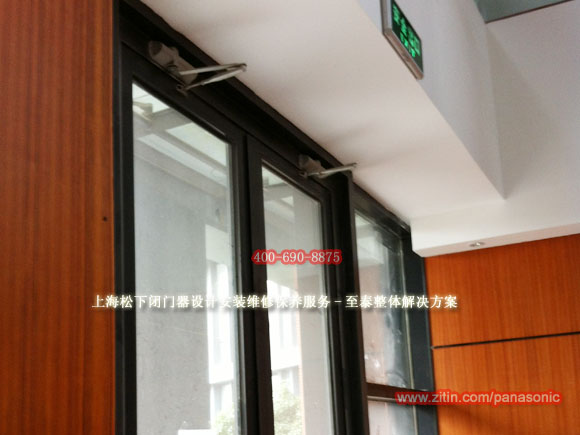
The choice of door closer must be decided according to the specifications of the door leaf and the environmental characteristics where the door is located; otherwise the expected results will not be achieved. Because door closers (including concealed door closers) are all installed above the door leaf and the hinges bear the entire weight of the door leaf, the choice of door closer is mainly related to the width of the door leaf. By door leaf weight, below 80 kg is a light door, around 120 kg is a medium door, and above 160 kg is a heavy door. By door width, usually a door leaf within 1 m wide is a light door, 1m-1.2m is a medium door, 1.2m-1.4m is a heavy door, and over 1.4m is a special door. Choose the corresponding door closer according to the type of door leaf. On the other hand, the door leaf is greatly affected by wind pressure, so if the wind pressure difference between the inside and outside of the door is large (such as passage doors and doors to air-conditioned rooms), a door leaf of the same width must choose a higher grade of door closer. For external doors, because the door leaf is directly affected by outdoor wind pressure, and the direction and magnitude of outdoor wind pressure in the area vary greatly, a heavy-duty door closer should be chosen regardless of the door width and weight. For doors opening outward, a door closer with opening damping must be used to prevent the serious consequences caused by wind pressure over-opening the door. For extra-large and extra-heavy door leaves, you should contact the manufacturer to discuss a ** solution.
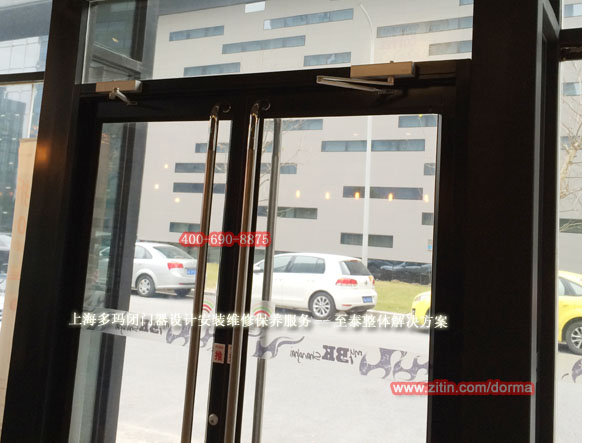
There are many ways to install a door closer, and all these ways have **ed from users' needs. The most basic installation method is to mount the door closer on the door leaf on the hinge side and install the arm (also called the scissor arm) on the door frame. Because many hardware fittings have requirements for the left/right opening direction of the door, there are clear ** definitions for left-hand and right-hand doors. How to install a door closer under different installation conditions can be inquired about from an experienced hardware supplier or the manufacturer.
(4) Other types of door closers
A concealed door closer is embedded in the upper frame of the door leaf, so that when the door is closed, the door closer is ** invisible. The key specification of this type of door closer is its thickness, because this relates to the thickness of the door leaf. Currently the thinnest concealed door closer in the world is only 28mm, and door leaves of ordinary thickness can be installed. Because installing this type of door closer requires cutting into the frame of the door leaf, it cannot be used on fire doors.
There is a type of door closer combined with a hinge, which can also achieve a certain aesthetic effect. But because the force arm of this door closer is close to the hinge, its moment is very small and its range of application is limited.
5. Door Stop

A door stop is a device that limits the opening angle of the door leaf. By function, there are two types: a simple door stop and a door stop with a hold-open function; the latter has a magnetic or mechanical device used to hold the door leaf fixed. By installation method, door stops come in floor-mounted and wall-mounted types. The basic structure of a door stop consists of a metal fixing part and an elastic cushioning material. For floor-mounted door stops, it is important to ensure the installation is firm, because in this installation method the screw-fixing direction is perpendicular and tangential to the direction of force in use. If the door leaf is relatively large or heavy, do not use this installation method.
6. Sealing Strips and Bottom Seals
Sealing strips do not traditionally belong to door hardware; in fact, sealing strips are closely related to the cross-section design of the door frame and leaf and are provided by the door manufacturer together with the door. The reason sealing strips are mentioned here is to discuss the sealing performance of single-action swing doors. In Germany, all single-action swing doors (whether single-leaf or double-leaf, including wooden, steel and aluminum alloy doors) have sealing strips, and the cross-section design of the frame and leaf is basically similar. The sealing strip is made of a synthetic material with high aging resistance, forming a compressed contact between the door leaf and the frame to achieve a very good sealing effect. It can be said that among all door types, the single-action swing door is the type that can achieve the best sealing effect. In addition, this compressed sealing also prevents direct hard contact between the door leaf and the frame, protecting the door leaf. However, if the door has no raised threshold, this compressed sealing is difficult to achieve at the bottom of the door, because a gap of 8mm must be left at the bottom of the door leaf to ensure free opening and closing of the door. If the overall sealing of the building is not very high, large outdoor wind pressure, especially in winter, will lead to serious heat loss. To address this, foreign manufacturers have produced a mechanical bottom seal. When the door is opened, the sealing strip of the bottom seal retracts into the bottom of the door leaf without affecting the movement of the door. When the door is closed, the latch-like mechanism of the bottom seal contacts and presses against the frame, and the sealing strip extends downward to press against the floor, achieving a good sealing effect.

How to choose high-** door-control hardware? Tel: +86 21 68568185 www.zitin.com
|










 Current Location: Home >